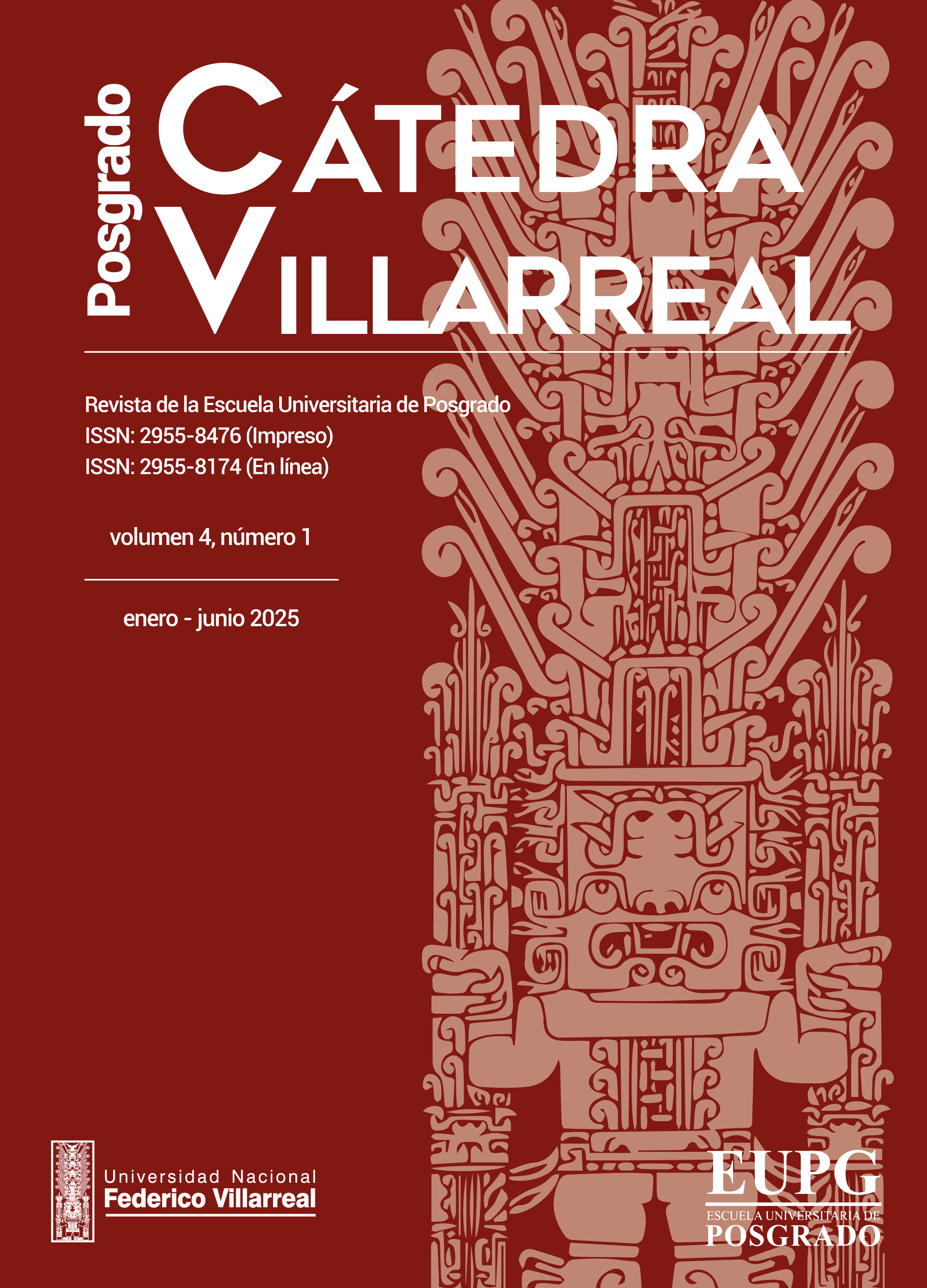
Analysis of the pretreatment of wastewater from laundries through organic coconut filters
DOI:
https://doi.org/10.62428/rcvp2025411742Keywords:
Organic filters, removal efficiency, chemical oxygen demand, biochemical oxygen demand, pre-treatment of wastewaterAbstract
The growth of cities is related to the increase in urban wastewater, in the study organic coconut fiber filters were designed for the pre-treatment of wastewater from laundries, physical activation of carbon was carried out, and combinations of physical and chemical activation, a removal efficiency was obtained in different efficiency percentages, filter 13 (Physical Activation) and filter 6 (Chemical Activation (ZnCl2) - 20% - 5 Hours), with a removal of 63.79% and 63.22% respectively for oils and greases, filter 1 (Chemical Activation (H3PO4) - 20% - 3 Hours) and filter 9 (Chemical Activation (KOH) - 20% - 5 Hours), with a removal of 33.21% and 32.69% respectively of biochemical oxygen demand, filter 10 (Chemical Activation (KOH) - 20% - 3 Hours) and filter 9 (Chemical Activation (KOH) - 20% - 5 Hours ), with a removal of 56.56% and 52.66% respectively of chemical oxygen demand, filter 1 (Chemical Activation (H3PO4) - 20% - 3 Hours) and filter 13 (Physical Activation), with a removal of 86.82% and 86.47% respectively of total suspended solids, filter 8 (Chemical Activation (ZnCl2) - 40% - 5 Hours) - 20% - 3 Hours) and filter 4 (Chemical Activation (H3PO4) - 40% - 5 Hours), with a removal of 89.71% and 76.46% respectively of ammonia.
Downloads
References
Agrafioti, E., Bouras, G., Kalderis, D., & Diamadopoulos, E. (2013). Biochar production by sewage sludge pyrolysis. Journal of Analytical and Applied Pyrolysis, 101, 72-78. https://doi.org/10.1016/j.jaap.2013.02.010
Ahmad, A., Upadhyay, S., Srivastava, A., & Asger, A. (2021). Biofertilizers: A Nexus between soil fertility and crop productivity under abiotic stress. Current Research in Environmental Sustainability, 3. https://doi.org/10.1016/j.crsust.2021.100063
Alonso, Á., Blanco, J. A., & Puerta-Piñero, C. (2022). The aquatic and the terrestrial have a place in Ecosystems. Ecosystems, 31(2), 2414-2414. https://doi.org/10.7818/ECOS.2414
Baharum, N., Nasir H., Ishak, M., Isa, N., Hassan, M., & Aris, A. (2020). Highly efficient removal of diazinon pesticide from aqueous solutions by using coconut shell-modified biochar. Arabian Journal of Chemistry, 13. https://doi.org/10.1016/j.arabjc.2020.05.011
Bastidas, M., Buelvas, L., Márquez, M., & Rodríguez, K. (2010). Activated carbon production from carbonaceous precursors of the Department of Cesar, Colombia. Technological Information, 21(3), 87–96. https://dx.doi.org/10.4067/S0718-07642010000300010
Centro Nacional de Planeamiento Estratégico [CEPLAN]. (2020). Informe Nacional del Perú 2020: la protección de la vida en la emergencia y después. https://www.gob.pe/institucion/ceplan/informes-publicaciones/925877-informe-nacional-del-peru-2020-la-proteccion-de-la-vida-en-la-emergencia-y-despues
Colantoni, A., Evic, N., Lord, R., Retschitzegger, S., Proto, A., Gallucci, F & Monarca, D. (2016). Characterization of biochars produced from pyrolysis of pelletized agricultural residues. Renewable and Sustainable Energy Reviews, 64, 187-194. https://doi.org/10.1016/j.rser.2016.06.003
Corregidor, C., Rocha, B., Chirivi, J., & Gómez, G. (2023). Matriz unificada para la evaluación del impacto ambiental; estudio de caso del río Chicamocha. Revista Facultad De Ingeniería Universidad De Antioquia, (111), 76–87. https://doi.org/10.17533/udea.redin.20230316
Corregidor, C., Rochal, B., Chirivi, J., & Gómez, G. (2023). Unified matrix for environmental impact assessment applied to water resources, Chicamocha River case study. Faculty of Engineering Magazine University of Antioquia, (111), 76–87. https://doi.org/10.17533/udea.redin.20230316
Cueva, P., & Lazarte, D. (2021). Biofilter with activated carbon from coconut shell for arsenic removal from the Tablachaca River water, Ancash – 2021 [Bachelor’s thesis, Universidad César Vallejo]. Repositorio UCV. https://hdl.handle.net/20.500.12692/66730
Decreto Supremo N.° 003-2011-VIVIENDA. Reglamento del Decreto Supremo Nº021-2019-vivienda,que aprueba los valores máximos admisibles de las descargas de aguas residuales no domesticas en el sistema de alcantarillado sanitario (8 de marzo de 2023). https://www.gob.pe/institucion/sedaayacucho/normas-legales/3979365-003-2011-vivienda
Decreto Supremo N.° 021-2009-VIVIENDA. Aprueban Valores Máximos Admisibles (VMA) de las descargas de aguas residuales no domésticas en el sistema de alcantarillado sanitario (8 de marzo del 2023). https://www.gob.pe/institucion/sedaayacucho/normas-legales/3979411-021-2009-vivienda
Ighalo, J.O., & Adeniyi, A.G. (2020). Adsorption of pollutants by plant bark derived adsorbents: An empirical review. Journal of Water Process Engineering, 35, 10122. https://doi.org/10.1016/j.jwpe.2020.101228
Ioannidou, O., & Zabaniotou, A. (2007). Agricultural residues as precursors for activated carbon production – A review. Renewable and Sustainable Energy Reviews, 11(9), 1966-2005. https://doi.org/10.1016/j.rser.2006.03.013
Johari, K., Alias, A.S., Saman, N., Song, S.T., & Mat, H. (2014). Removal performance of elemental mercury by low-cost adsorbents prepared through facile methods of carbonisation and activation of coconut husk. Waste Management & Research: The Journal for a Sustainable Circular Economy, 33(1), 81–88. https://doi.org/10.1177/0734242X14562660
Lua, A. C., & Yang, T. (2004). Effect of activation temperature on the textural and chemical properties of potassium hydroxide activated carbon prepared from pistachio-nut shell. Journal of colloid and interface science, 274(2), 594–601. https://doi.org/10.1016/j.jcis.2003.10.001
Mohan, D., Sarswat, A., Sik, Y., & Pittman Ch. (2014). Organic and inorganic contaminants removal from water with biochar, a renewable, low cost and sustainable adsorbent – A critical review. Bioresource Technology, 160, 191-202. https://doi.org/10.1016/j.biortech.2014.01.120
Peña, K., Giraldo, L., & Moreno, J. (2012). Preparation of activated carbon from orange peel by chemical activation. physical and chemical characterization. Colombian Chemistry Magazine, 41(2), 311-323. http://www.scielo.org.co/scielo.php?script=sci_arttext&pid=S0120-28042012000200010&lng=en&tlng=es
Pérez, Y., Cortés, D., & Jauregui, U. (2022). Constructed wetlands as an alternative for wastewater treatment in urban areas: a review. Ecosystems, 31(1). https://doi.org/10.7818/ECOS.2279
Rizwan, M., Ali, S., Qayyum, M.F., Ibrahim, M., Zia, M., Abbas, T., & Sik, Y., (2016). Mechanisms of biochar-mediated alleviation of toxicity of trace elements in plants: a critical review. Environmental Science and Pollution Research, 23, 2230–2248. https://doi.org/10.1007/s11356-015-5697-7
Salas, D., Zapata, M., & Guerrero, J. (2007). Cost model for wastewater treatment in the region. In Scientia et Technica, 1(37), 591–596. https://revistas.utp.edu.co/index.php/revistaciencia/article/view/4191
Sujiono, E.H., Zabrian, D., Zurnansyah, Mulyati, Zharvan, V, Samnur & Humairah, N.A (2022), Fabrication and characterization of coconut shell activated carbon using variation chemical activation for wastewater treatment application. Results in Chemistry, 4, 100291. https://doi.org/10.1016/j.rechem.2022.100291
Superintendencia Nacional de Servicios y Saneamiento [SUNASS]. (2015). Diagnosis of the wastewater treatment plants in the scope of operation of the entities that provide sanitation services. http://www.sunass.gob.pe/doc/Publicaciones/ptar2.pdf
United Nations Educational, Scientific and Cultural Organization [UNESCO]. (2019) World water development report 2019: leaving no one behind. https://unesdoc.unesco.org/ark:/48223/pf0000367306
Valladares, M., Valerio, C., De la Cruz, P., & Melgoza, R. (2018). Non-conventional absorbers: sustainable alternatives for wastewater treatment. Revista Ingenierías Universidad De Medellín, 16(31), 55–73. https://doi.org/10.22395/rium.v16n31a3
Wu, H., Chen, R., Du, H., Zhang, J., Shi, L., Qin, Y., Yue, L., & Wang, J. (2018). Synthesis of activated carbon from peanut shell as dye adsorbents for wastewater treatment. Adsorption Science & Technology, 37(1-2), 34-48. https://doi.org/10.1177/0263617418807856
Xiang, H., Ren, G., Yang, X., Xu, D., Zhang, Z., & Wang, X. (2020). A low-cost solvent-free method to synthesize α-Fe2O3 nanoparticles with applications to degrade methyl orange in photo-fenton system. Ecotoxicology and Environmental Safety, 200, 110744. https://doi.org/10.1016/j.ecoenv.2020.110744
Yaashikaa, P., Senthil, P., Sunita, V., & Saravanan, A. (2020). A critical review on the biochar production techniques, characterization, stability and applications for circular bioeconomy. Biotechnology Reports, 28, e00570. https://doi.org/10.1016/j.btre.2020.e00570
Yamaguchi, N., Cusioli, L., Quesada, H., Camargo, M., Fagundes, M., Salcedo, A., Gutierres, R., Fernandes, M., & Bergamasco, R. (2021). A review of Moringa oleifera seeds in water treatment: Trends and future challenges. Process Safety and Environmental Protection, 147, 405-420. https://doi.org/10.1016/j.psep.2020.09.044
Published
How to Cite
Issue
Section
License
Copyright (c) 2025 Cátedra Villarreal Posgrado

This work is licensed under a Creative Commons Attribution-NonCommercial-ShareAlike 4.0 International License.
Usted es libre de:
- Compartir: copiar y redistribuir el material en cualquier medio o formato.
- Adaptar: remezclar, transformar y desarrollar el material.
- El licenciante no puede revocar estas libertades siempre y cuando usted cumpla con los términos de la licencia.
Bajo los siguientes términos:
- Atribución: Debe otorgar el crédito correspondiente , proporcionar un enlace a la licencia e indicar si se realizaron cambios. Puede hacerlo de cualquier manera razonable, pero no de forma que sugiera que el licenciante lo respalda a usted o su uso.
- No comercial: No está permitido utilizar este material con fines comerciales.
- Compartir Igual: si remezcla, transforma o crea obras derivadas del material, debe distribuir sus contribuciones bajo la misma licencia que el original.
- Sin restricciones adicionales: no podrá aplicar términos legales ni medidas tecnológicas que restrinjan legalmente a otros para que no hagan nada de lo que permite la licencia.